Highlights
- The European packaging services market is projected to reach €20.3 billion by 2026.
- Sustainability initiatives are transforming the industry, promoting recyclable and bio-based packaging solutions.
Overview of the Warehouse and Packaging Industry in Europe
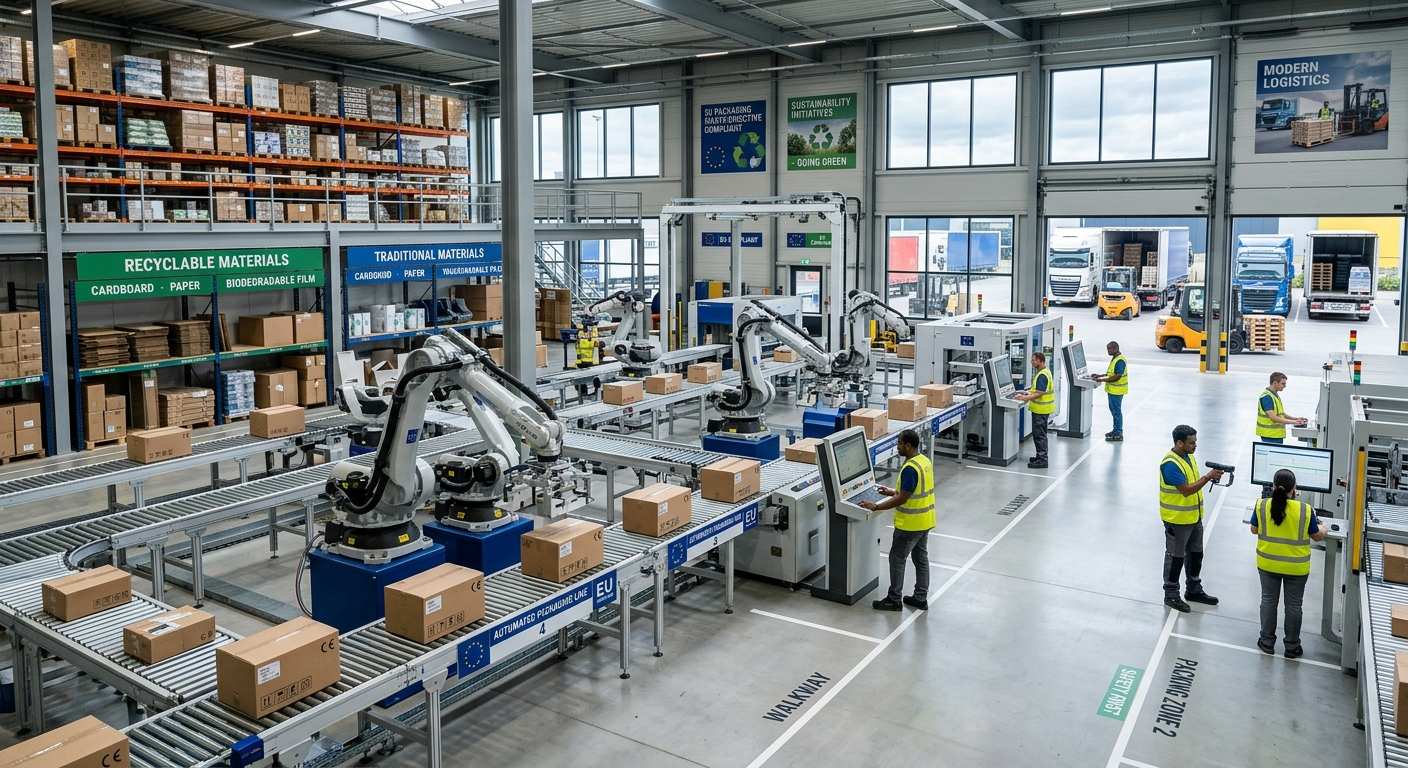
The warehouse and packaging industry serves as a backbone of Europe’s logistics and supply chain infrastructure, with the packaging services market projected to reach approximately €20.3 billion by 2026. This growth stems from a heightened need for secure and compliant packaging solutions, alongside the rapid expansion of e-commerce and third-party logistics (3PL). The integration of automation technologies, including artificial intelligence (AI) and robotics, is transforming operational models across the continent, enhancing efficiency while reducing labor dependencies.
Technological innovations, particularly in packaging machinery, are critical drivers of change. The packaging machinery market is set to rise significantly, bolstered by regulatory pressures and labor cost increases, while smart warehousing solutions are gaining traction. Concurrently, sustainability initiatives are pushing the adoption of circular economy principles, promoting recyclable and sustainable packaging materials amid stringent EU regulations. This evolving landscape presents both regional strengths and significant challenges, including labor shortages and raw material cost fluctuations, necessitating workforce reskilling in response to technological advancements.
Key Growth Drivers
The interplay of technological advancements, sustainability demands, market dynamics, and supportive regulatory frameworks underpins the growth of Europe’s warehouse and packaging sector. The adoption of AI and advanced automation has become crucial, accounting for around 45% of new warehouse installations and significantly improving operational efficiency—reducing labor costs by 15% and increasing output by 32% on average. Emerging technologies, such as autonomous robots and automated guided vehicles, underscore the shift toward smart warehousing, enabling adaptability to modern supply chain demands.
Sustainability efforts are transforming both the packaging and warehousing sectors, driven by environmental concerns and regulatory mandates. The focus on circular economy principles, regulatory compliance, and the demand for eco-friendly materials is shaping market practices, compelling stakeholders to embrace sustainable solutions. The rise of innovative packaging materials, including compostable plastics and fiber-based alternatives, is indicative of this trend and aligns with governmental sustainability initiatives.
Challenges and Opportunities
While the warehouse and packaging industry in Europe presents considerable growth potential, it is not without challenges. An acute labor shortage and rising operational costs are prompting a shift toward automation, resulting in substantial job displacement. Approximately 40% of employers anticipate workforce reductions due to AI automation, highlighting the urgent need for upskilling and reskilling. Nevertheless, the emergence of new roles related to AI maintenance and sustainability integration provides opportunities to reshape the workforce.
The evolving landscape offers significant advantages, particularly concerning the acceleration of e-commerce and nearshoring trends. Companies are striving to relocate production closer to end markets within Europe, increasing the demand for strategically positioned warehouse facilities. Firms investing in sustainable practices and advanced automation technologies position themselves favorably in an increasingly competitive market, driven by consumer preferences for environmentally responsible solutions.
Regulatory Environment and Market Dynamics
The regulatory framework governing Europe’s warehouse and packaging industry is becoming increasingly complex. Key regulations, such as the Packaging and Packaging Waste Directive, aim to minimize waste and promote recyclability, thus aligning closely with broader EU sustainability goals. Effective compliance with these regulations is essential for businesses to remain competitive and proficiently adapt to changing market requirements. Furthermore, EU industrial policies encourage innovation and research, offers cross-sectoral support, and facilitate adjustments to enhance operational efficiencies.
As various regions exhibit differing regulations, firms must navigate local compliance challenges effectively. The fragmented market structure also impacts the competitive landscape, where large firms dominate revenue shares while numerous SMEs address regional logistics needs. This dynamic necessitates a focus on operational excellence and strategic adaptations to harness emerging opportunities.
Future Outlook and Strategic Considerations
The European warehousing and packaging industry is on the cusp of transformation, driven by several core trends. The shift toward automation and sustainable practices is expected to reshape operational paradigms, with the warehouse automation market projected to grow significantly in the coming years. As sustainability becomes paramount, both regulatory pressures and consumer preferences will push industries towards bio-based and recycled materials, influencing packaging and logistics operations.
Investor interest in development projects associated with European logistics markets reflects a growing acknowledgment of the interplay between sustainability, technology adoption, and market efficiency. With substantial returns anticipated, stakeholder engagement in strategic investments is vital for long-term competitiveness. Moreover, the geographical clustering of logistics hubs can enhance operational efficiency and regulatory navigation, presenting distinct advantages for entities engaging in the evolving landscape of warehousing and packaging.
The content is provided by Sierra Knightley, Fact-Nest